
A farm-to-table wedding menu builds every course around seasonal, locally sourced ingredients – usually from farms within 100 miles of your venue. At The Hideaway at Crooked Creek in Whitsett, NC, you’re already standing on a 90-acre working farm with a 100-year history. The setting, the food, and the story all come from the same area. That’s what makes it unforgettable.
1. The Difference Between “Farm Aesthetic” and an Actual Farm
Picture a warm October evening in Whitsett, NC. Your guests are seated at long tables surrounded by 90 acres of open land, gorgeous stone walls, and the sound of a waterfall nearby. Someone sets down a platter of slow-roasted NC pork with sweet potato puree made from produce grown less than 50 miles away. A guest asks where the food came from. The answer is a real farm name in a real county.
That moment doesn’t happen by accident. And it doesn’t happen at a venue that just borrowed the farm look.
The Hideaway at Crooked Creek is a historic farmhouse property in Whitsett, NC – 15 miles from Greensboro. The history is in the house, the land, and the bones of the property itself. When your food comes from the same region as that history, dinner stops being just a meal and starts being part of the wedding story.
This is worth saying plainly: a farm-to-table menu at a genuine working farm hits completely differently than the same description printed on a card at a hotel ballroom. Your guests feel the difference even if they can’t articulate why.
PRO TIP: When interviewing caterers, ask them to name their farm partners by name and county. “We source locally” is a tagline. “We’ve bought directly from a farm in Alamance County for four years” is the real answer.
2. What’s in Season in NC and Why It Changes Everything
Here’s something most wedding blogs won’t tell you: the single biggest factor in how good your food tastes is whether it was actually grown nearby and recently. A tomato from a Guilford County farm in August and one shipped from a warehouse in January are not the same ingredient. One makes your guests put down their forks and say something. The other just sits there.
North Carolina has one of the longest growing seasons on the East Coast, which means no matter when you get married, there’s something genuinely worth building a menu around.
Spring (April – June): Late April through May is NC strawberry season and they’re worth centering a whole dessert table around. Asparagus, snap peas, spring onions, fresh herbs. Lighter, brighter flavors – perfect for couples who want a menu that feels alive and a little unexpected.
Summer (July – September): This is when NC produce goes full volume. Peaches from the Sandhills. Heirloom tomatoes in every color. Silver Queen corn. Watermelon that needs nothing on it. A summer wedding at The Hideaway at Crooked Creek built around these ingredients is genuinely hard to pull off badly. The one real challenge is heat – more on that in section five.
Fall (October – November): October might be the best month to get married in NC, full stop. The farm is stunning, temperatures are cooperative, and the produce – sweet potatoes, butternut squash, Sandhills pecans, local apples – makes for the kind of warm, deeply satisfying dinner people talk about for years. If you have flexibility in your date and food matters to you, look hard in October.
PRO TIP: Ask your caterer what’s growing specifically in Guilford, Alamance, or Rockingham County the month of your wedding – not just “what’s local in NC.” That hyper-regional specificity is where the best ingredients actually live.
3. Finding a Caterer Who Actually Sources Locally
The Hideaway runs with a flexible vendor policy, so you’re not assigned a house caterer. See vendor details in our FAQs. For a farm-to-table wedding, that freedom matters. You can find someone who sources locally because it’s genuinely how they cook – not because the venue put it in the brochure.
Good catering and event planning starts with real farm relationships, not marketing language. When you sit down with caterers in the Greensboro-Triad area, push the conversation past the sales pitch. Ask which specific farms they buy from and how long those relationships have been in place. Ask to see an actual seasonal menu from a recent wedding, not a template. Ask what happens if a local crop has a bad season – a caterer with real farm relationships has a backup plan already. And ask what cold storage equipment they bring to an outdoor site.
The Piedmont Triad Farmers Market in Greensboro is also worth a Saturday visit. Some of the best local caterers source directly from vendors there every week. When the supply chain is that short – farm to market to your wedding table – you can genuinely taste it.
PRO TIP: Ask your top caterer candidates to do your tasting using only what’s locally available right now. That single request tells you more about how they actually work than any portfolio or sales deck.
4. What the Menu Looks Like, Course by Course
The best wedding food isn’t about loading up every course with options. It’s about choosing well and letting good ingredients carry the meal. Here’s what a focused, seasonal menu for a wedding reception can look like at The Hideaway at Crooked Creek.
Cocktail Hour
Your guests just watched you get married. They’re emotional, happy, and hungry. This is when you set the tone for the rest of the night – and a well-executed local spread does that effortlessly.
Think NC honey and goat cheese on warm crostini. A grazing table with local artisan cheeses, cured NC meats, seasonal fruit, and fresh bread. Grilled peach and prosciutto skewers in summer. A selection of wines that pair magnificently with your spread – guests notice it and it sparks conversation without you having to prompt anyone. If the budget allows, shucked NC coast oysters are a genuine showstopper.
Seated Dinner
Family-style service feels right on a farm. Big shared platters moving down long tables, people reaching across and talking. It’s warmer than plated service and it fits the spirit of the hand-crafted event spaces naturally.
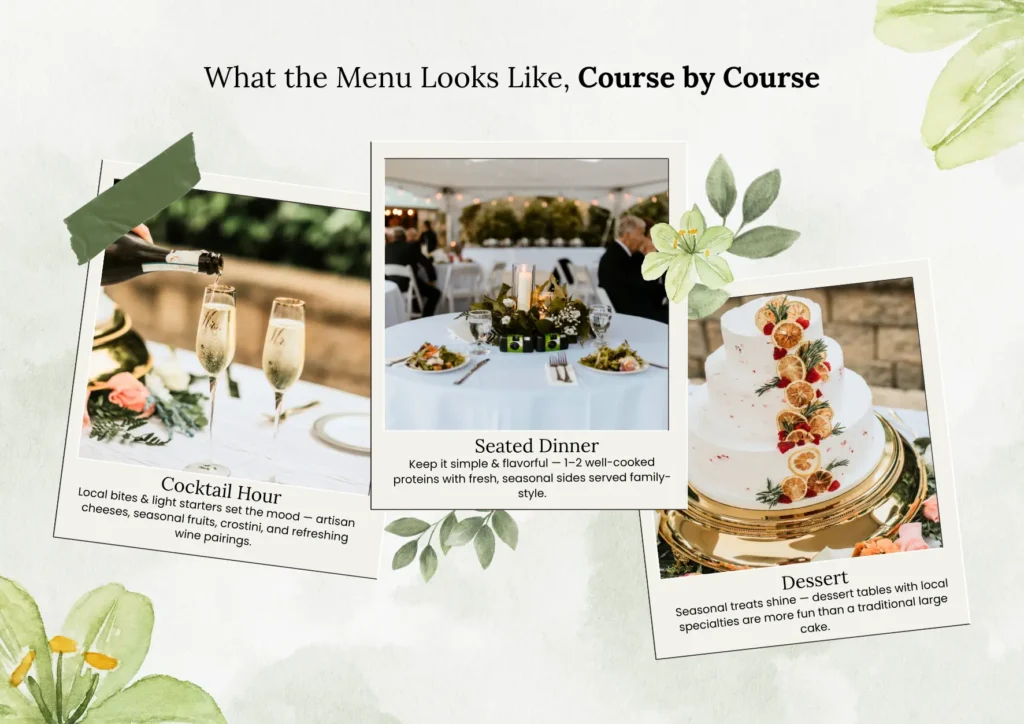
One or two proteins done really well will always beat five options done adequately. NC pasture-raised chicken and slow-roasted pork shoulder together cover nearly every preference at the table. Add sides worth eating: stone-ground grits from a Piedmont mill, roasted sweet potato with local sorghum, a simple heirloom tomato salad dressed in apple cider vinegar. Focused and flavorful beats long and forgettable every time.
Dessert
Local bakers near Greensboro have gotten genuinely creative with seasonal flavors. Strawberry and lemon in spring. Peach bourbon cake in summer. Spiced apple and salted caramel in fall. A dessert table with NC-style banana pudding, muscadine tarts, and pecan pralines alongside a smaller cutting cake is often more fun – and more delicious – than a towering tiered cake that nobody finishes. Put small cards on each item naming the farm or bakery behind it. People stop and read them. Those small moments of connection are exactly what this kind of wedding is built around.
5. The Weather Stuff Nobody Warns You About
A lot of wedding content glosses over NC weather because it’s not a romantic topic. But if you’re getting married between April and October, you need a real plan – not just a hope.
The Piedmont regularly hits 90 degrees through summer. Humidity sits above 70 percent for months. Afternoon thunderstorms from June through September can roll in with 20 minutes of warning. These aren’t rare exceptions. It’s a normal Tuesday.
Three things that actually matter for outdoor food service: First, the 90-minute rule – any food sitting out above 90 degrees becomes a health risk after 90 minutes. Build your service timeline around it, not around what looks nice. Second, your caterer needs real cold equipment – portable refrigerated units for dairy, seafood, cut fruit, and anything mayo-based. Ask them specifically what they bring to outdoor farm events. Third, you need a written storm plan before the wedding day. At The Hideaway at Crooked Creek, the wedding party suites in the Farmhouse give you real options for staging cold items before service. But that plan has to exist in advance.
One more thing: The Hideaway has Spanish-speaking staff – learn more about the property and team. For couples incorporating Latino food traditions into your menu – a taco station with NC-raised beef, tamales with locally milled masa, arroz con pollo with NC free-range chicken – that Spanish-speaking support makes vendor coordination and family communication genuinely easier. Bilingual menu cards cost almost nothing to print and communicate a lot about whose culture belongs at the table.
PRO TIP: Schedule your caterer’s site visit at the same time of day as your reception, not first thing in the morning. Sun exposure, wind, and heat tell a completely different story in the afternoon.
6. What It Realistically Costs
Farm-to-table doesn’t automatically cost more. What makes it expensive is forcing out-of-season ingredients onto a “local” menu – then your caterer is sourcing artisan produce at a premium just to maintain the concept. Build around what’s actually growing near Whitsett on your wedding date and you’ll likely spend less than you expect.
Full-service seated dinner catering in the Greensboro area runs roughly $65 to $140 per person. A focused seasonal menu lands comfortably on the lower end of that range. A few things that genuinely help: pick one or two proteins and do them well rather than spreading thin across many options. Use stone-ground grits or polenta as your starch – local, inexpensive, and universally liked. Buy seasonal fruit directly from a farm and hand it to your baker rather than paying their ingredient markup. And consider a dessert table over a tiered cake – it usually costs less and guests almost always prefer it.
For a broader baseline, The Knot’s catering cost guide is a reasonable starting point – just note that NC typically runs below their national averages. Brides Magazine has a solid farm-to-table food overview worth reading before your first caterer meeting. And Visit NC’s farm experiences page is a great way to get familiar with the regional food culture before you start tasting appointments.
PRO TIP: Couples who book their venue November through February consistently get more flexibility from local caterers on pricing and menu creativity. Lighter schedules mean more willingness to collaborate.
FAQ
Is farm-to-table catering actually more expensive?
Not when it’s planned around what’s in season near you. Costs climb when couples try to force out-of-season ingredients onto a local menu. Stick to what’s growing near Whitsett on your wedding date and you’ll likely spend less than you think.
What’s the best NC season for a farm-to-table wedding?
October is hard to beat – best produce, best temperatures, best atmosphere on the farm. Late May and early June are close behind. Summer is incredible for flavor but needs logistics planning. Winter is absolutely doable with the right caterer.
Can I bring my own caterer to The Hideaway at Crooked Creek?
Yes. The flexible vendor policy means you choose whoever fits your vision, as long as they’re licensed and insured in NC. See vendor FAQs here.
How do I keep outdoor food safe in NC summer heat?
Stagger your station timing, use portable cold equipment for perishables, follow the 90-minute rule for food in heat above 90 degrees, and have a written storm plan ready before the day starts.
Can we have a bilingual wedding menu?
Absolutely. The Spanish-speaking staff at The Hideaway at Crooked Creek can help with translations and vendor communication throughout the day.
How far in advance should we plan?
Six months minimum, nine is better. Local farms have limited seasonal capacity and the best caterers fill their commitments early. The earlier you lock in a direction, the more you actually have to work with.
Come See It For Yourself
The Hideaway at Crooked Creek is 90 acres of private farmland in Whitsett, NC – 15 miles from Greensboro. Stone walls, a waterfall, hand-crafted event spaces, and a team that genuinely loves helping couples pull this kind of wedding off well.
If a farm-to-table wedding is what you’re picturing, come walk the property. See where the food stations would go. Ask the hard questions about vendors, weather, and logistics. That’s exactly what the tour is for.